LINEAR
Parallel lines meet
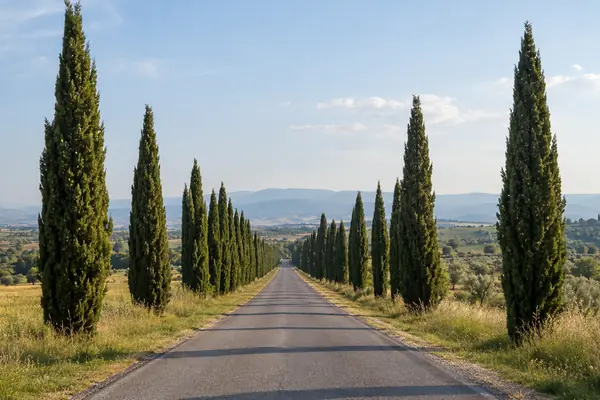
The sides of a road never meet, but they appear to as they recede. Painters draw them meeting at a vanishing point on the horizon.
Pick a depth trick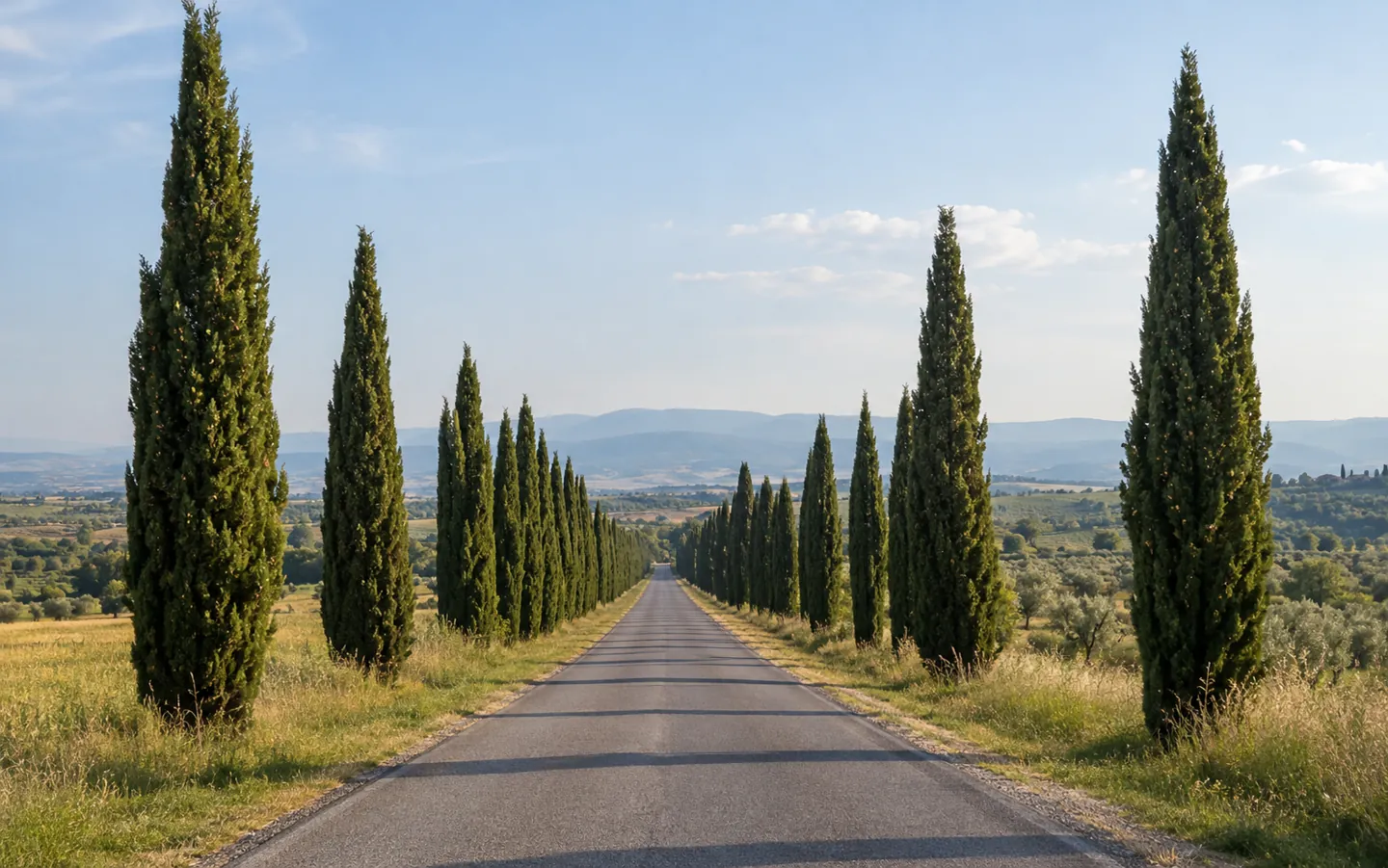
 doodlescene
PERSPECTIVE, EXPLAINED
2 TRICKS lines and air
Every picture is flat. Good ones do not look it.
Painters use two old tricks to create space: lines that meet at a vanishing point, and colours that fade and turn blue with distance. Here is how each works, where it came from, and how to try it.
Updated
Pick a depth trickTHE SHORT ANSWER
The National Gallery describes two systems:
linear perspective works with line, aerial perspective with tone and colour.
LINEAR
The sides of a road never meet, but they appear to as they recede. Painters draw them meeting at a vanishing point on the horizon.
Pick a depth trickAERIAL
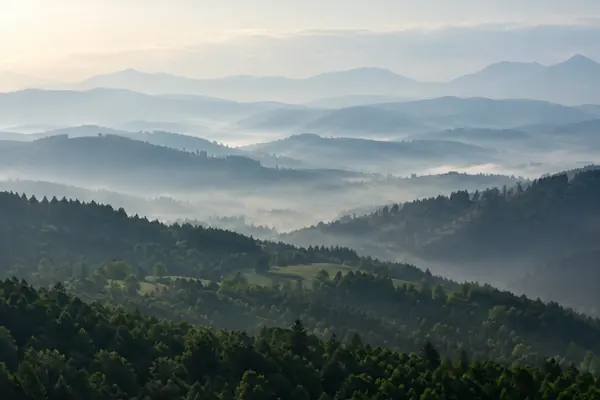
As a landscape recedes, its colours and tones change because of the atmosphere. Painters copy this with gradual shifts from foreground to background.
Why it happensTRY IT
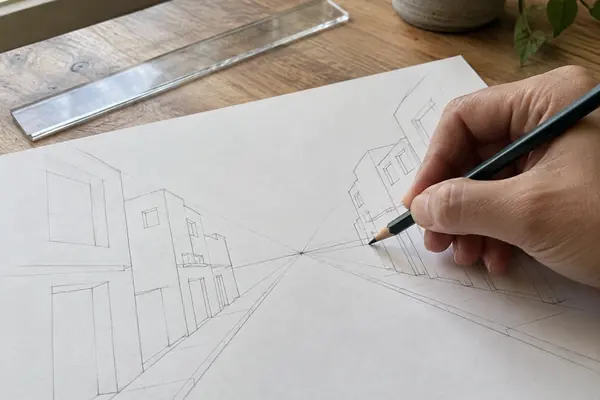
A single vanishing point on the horizon is the simplest system. Draw every receding line towards it and the scene starts to open up.
How to draw itWHICH DEPTH TRICK?
Choose a way of showing depth to see what it does and where the idea comes from. The bar shows how much measured geometry the trick relies on, from drawn construction to tone and colour alone.
Based on the National Gallery and Tate glossaries. Many paintings combine several of these at once.
TWO DATES WORTH KNOWING
One date for the first rulebook,
one for a painting that still teaches it.
1435
Alberti describes single-point perspective
The best known system of linear perspective is the one Alberti described in De Pictura, On Painting, in 1435, with receding parallel lines meeting at one point on the horizon.
ON PAINTING · NATIONAL GALLERY
1689
Hobbema paints The Avenue at Middelharnis
An avenue of tall trees funnels the eye straight to the vanishing point. A walking figure's head sits precisely level with the horizon, just beside it.
THE AVENUE · NATIONAL GALLERY
The National Gallery says the painting was admired by Van Gogh, who emulated its effects after first seeing it there in 1884.
DRAW A SCENE WITH DEPTH
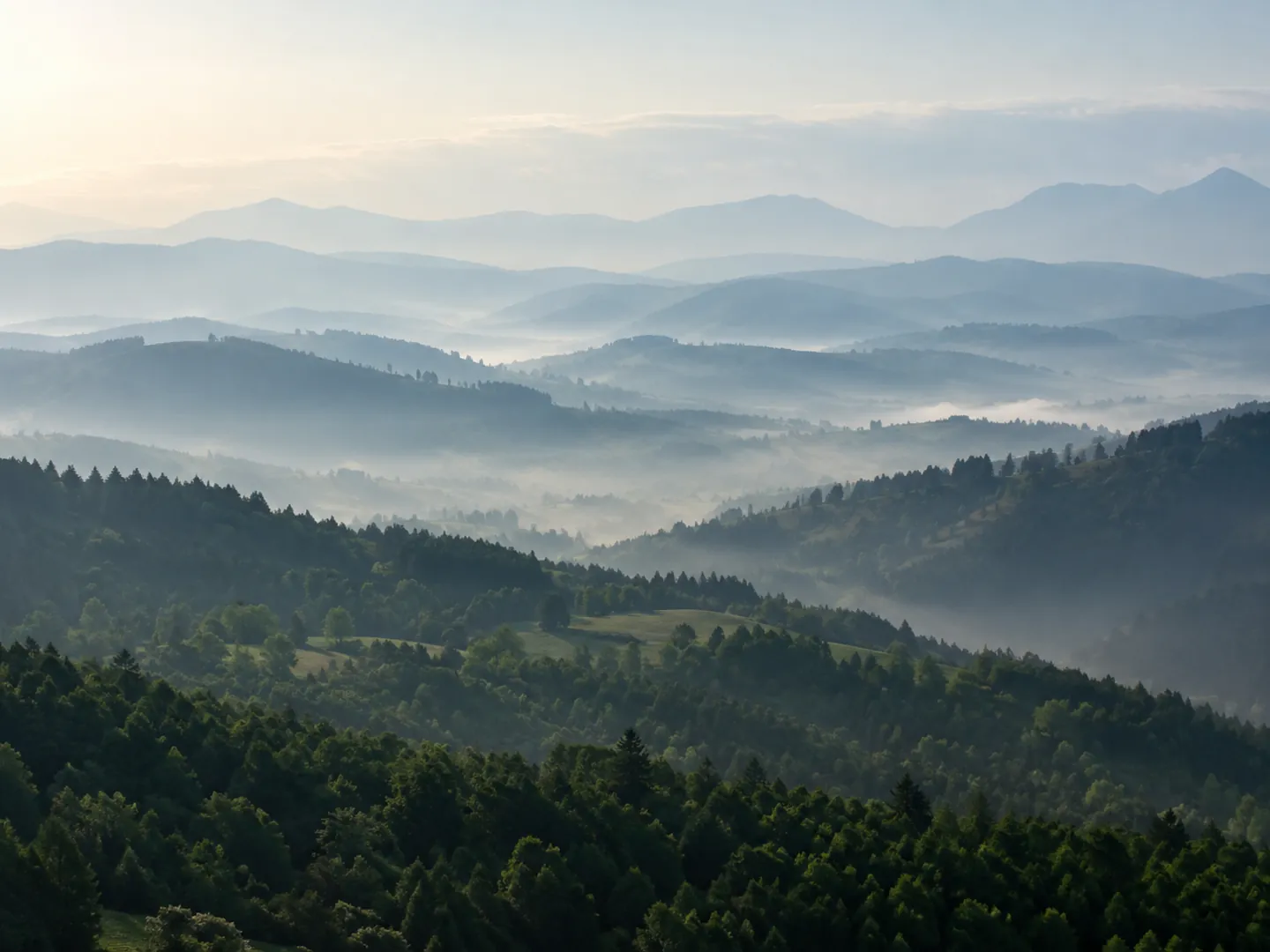
You need paper, a pencil and a ruler. These steps follow the two systems the museums describe.
Put a horizontal line at your eye level. In The Avenue at Middelharnis, the walking man's head sits exactly on it.
Choose one point on the horizon. Draw the edges of roads, rails and rooflines so that they all run towards it.
Make trees, people and posts smaller the closer they sit to the vanishing point, so their size matches their distance.
Shade far hills lighter and bluer than near ones, and soften the contrast as the scene recedes.
WHY DISTANCE LOOKS BLUE
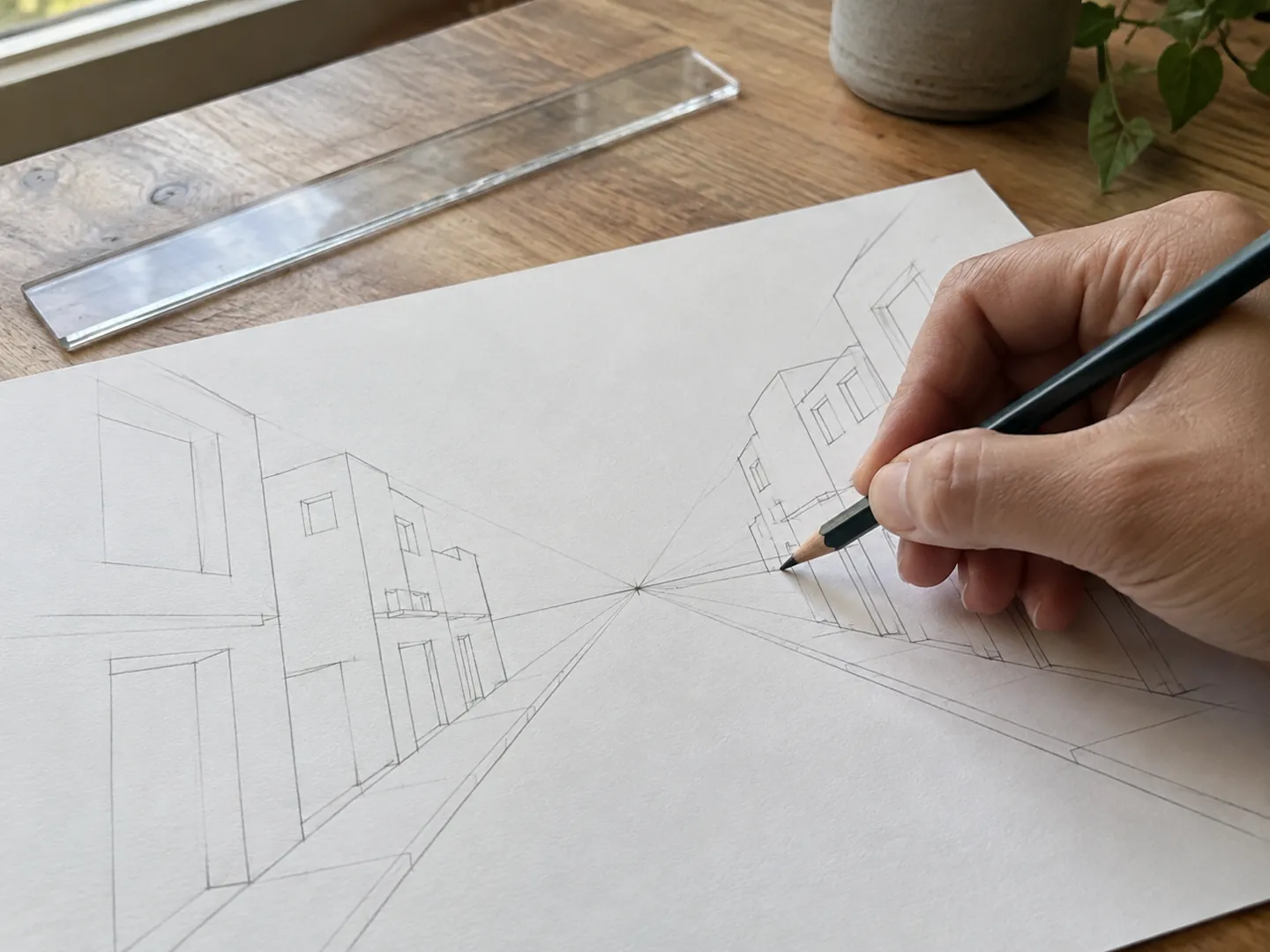
The Met Office explains that sunlight is scattered by tiny gas molecules in the air, which scatter short blue wavelengths much more than long red ones. Light from near the horizon travels through more atmosphere, so the sky there looks paler.
Painters noticed the effect long before the physics. The National Gallery says Leonardo da Vinci, among others, observed that a landscape's colours and tones change as it recedes, and studied it in his writings. Because the gradations are so subtle, oil paint suited it best.
Questions
In linear perspective, it is the point that is supposed to appear furthest from the viewer, where all receding parallel lines meet. The National Gallery glossary describes it as part of a linear perspective scheme.
It developed in Italy in the early 15th century. The National Gallery credits the single-point system to the architect Brunelleschi in Florence; Tate notes the painter Paolo Uccello developed it. Alberti codified it in 1435.
Also called atmospheric perspective, it creates distance with tone and colour rather than lines. Distant parts of a landscape are painted paler and bluer, as the atmosphere makes them look.
Yes. The National Gallery says Netherlandish painters in the early 15th century created convincing space by eye, without the Italian system, and that aerial perspective first appears in their paintings.
The Met Office says light from the horizon travels through more atmosphere and is scattered and re-scattered, which mixes in more white light and makes the blue less intense.
Sources
ABOUT THIS NAME
doodlescene.com is part of the DoodleSale portfolio. It isn't in an auction right now, but you can ask about leasing it.